Automated External Defibrillators (AEDs)
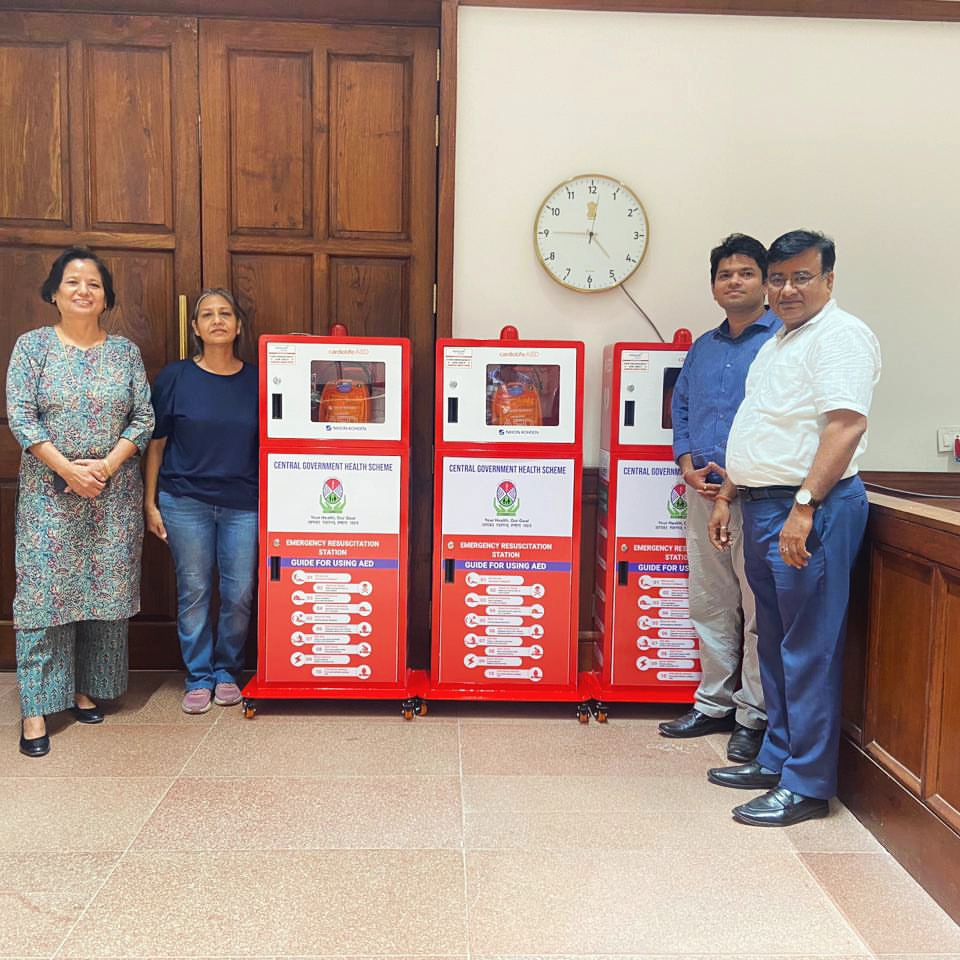
Nihon Kohden Cardiolife AED-3100
Be Ready to Save a Life
Designed for both trained and untrained responders with intelligent rescue guidance and fast, reliable shock delivery during Sudden Cardiac Arrest emergencies.

About SCA
Sudden Cardiac Arrest
Sudden Cardiac Arrest (SCA) is among the leading causes of death in the world.
One of the main causes of SCA is ventricular fibrillation (VF), a life-threatening condition where the heart beats in an abnormal rhythm and is unable to pump blood effectively throughout the body.
In such cases, electric shock (defibrillation) is currently the only effective treatment to restore the heart’s normal rhythm.
The survival rate decreases by 7–10% for every minute that passes without defibrillation, and without immediate treatment, the victim can die within minutes.
Our AED takes less than 15 seconds from turning the power on to discharge. The faster charging time helps deliver energy quickly when VF is observed.
What is an AED?
An Automated External Defibrillator (AED) is a portable device that analyzes heart rhythm and delivers a shock when necessary to help restore a normal heartbeat during Sudden Cardiac Arrest.
Usage Steps
How to Use Nihon Kohden Cardiolife AED-3100
Open the Lid to Turn On the AED
Open the lid of the device to automatically turn on the power.
As soon as the AED is activated, clear voice instructions will begin guiding the rescuer through each stage of the rescue process.
Carefully listen to and follow all prompts provided by the device.
Attach the Defibrillation Pads
Remove the electrode pads from their packaging and apply them to the patient's chest according to the illustrations provided on the pads.
The Cardiolife AED uses color-coded pads and clear visual guidance to simplify pad placement.
Position one pad on the upper right side of the chest below the collarbone and the second pad on the lower left side of the chest below the armpit.
Once the pads are attached, ensure they are firmly adhered to the patient's skin.
Select Adult or Child Mode if Required
If the patient is a child, activate the Adult/Child mode switch before proceeding.
The Cardiolife AED allows rescuers to change from adult to pediatric energy levels using the built-in mode selector without requiring separate pediatric pads.
The device automatically adjusts the shock energy to the appropriate level for the selected patient category.
Allow the AED to Analyze the Heart Rhythm
Once the pads are attached, the Nihon Kohden Cardiolife AED automatically begins analyzing the patient's heart rhythm.
During this analysis, ensure that nobody is touching the patient.
The AED uses advanced rhythm analysis technology to determine whether a shockable rhythm is present and will provide clear instructions based on the results.
Deliver a Shock if Advised
If the AED detects a shockable rhythm such as ventricular fibrillation, it will indicate that a shock is advised.
The shock button will begin flashing to alert the rescuer.
Ensure that everyone is clear of the patient and loudly announce "Stand Clear."
After confirming that no one is touching the patient, press the flashing shock button to deliver the defibrillation shock.
Resume CPR Immediately
After the shock has been delivered, immediately resume CPR as instructed by the AED.
Continue performing chest compressions at the recommended rate and depth while following the AED's voice prompts.
Continue CPR Until Re-analysis
Continue performing CPR according to the AED's prompts.
After approximately two minutes of CPR, the AED will instruct rescuers to stop compressions so that it can perform another rhythm analysis.
During this time, ensure that nobody is touching the patient.
Follow Ongoing AED Instructions
Following re-analysis, the AED will determine whether another shock is required.
If a shock is advised, follow the device's instructions to safely deliver therapy.
If no shock is advised, resume CPR immediately.
Continue following the voice prompts and guidance provided by the Cardiolife AED throughout the rescue process.
Continue the Rescue Until Help Arrives
Repeat the cycle of rhythm analysis, shock delivery when indicated, and CPR until emergency medical personnel arrive and take over patient care.
If the patient regains normal breathing, consciousness, or signs of life, continue monitoring them closely until medical professionals arrive.
The Nihon Kohden Cardiolife AED is designed around a simple three-step rescue process: Open the Lid, Attach the Pads, and Press the Shock Button.
Combined with automatic self-testing, Adult/Child mode selection, rapid shock delivery, and continuous rhythm analysis, it enables both trained and untrained responders to provide lifesaving defibrillation quickly and confidently during Sudden Cardiac Arrest emergencies.
Why Every Workplace Needs an AED
Early defibrillation significantly improves survival rates during Sudden Cardiac Arrest. AEDs provide a critical link in the chain of survival until emergency medical services arrive.
Specifications
Technical Details
| Model Name | Nihon Kohden Cardiolife AED-3100 |
|---|---|
| Certification | CE Certified |
| Warranty | 5 Years |
| IP Rating | IP66 (European Specification) / IP55 (Some Regional Specifications) |
| Battery Life | Up to 4 Years Standby Life |
| Energy Level Adult | 150J - 150J - 200J |
| Energy Level Child | 50J - 70J - 70J |
| Self-Test | Automatic Daily Self-Test |
| Adult & Child Mode | Integrated Adult/Child Mode Switch – No Pad Change Required |
| CPR Feedback | Voice-Guided CPR Instructions |
| Pad Shelf Life | Approximately 4 Years |
| Weight | 2.3 kg (Including Battery and Pads) |
| Shock Delivery Time | Less than 15 Seconds from Power-On to Shock Delivery |
| Special Features | Continuous VF Analysis, Bluetooth Data Transfer, Remote Monitoring Compatibility (Cardiolife Connect), Fast Charging, Easy 3-Step Operation |